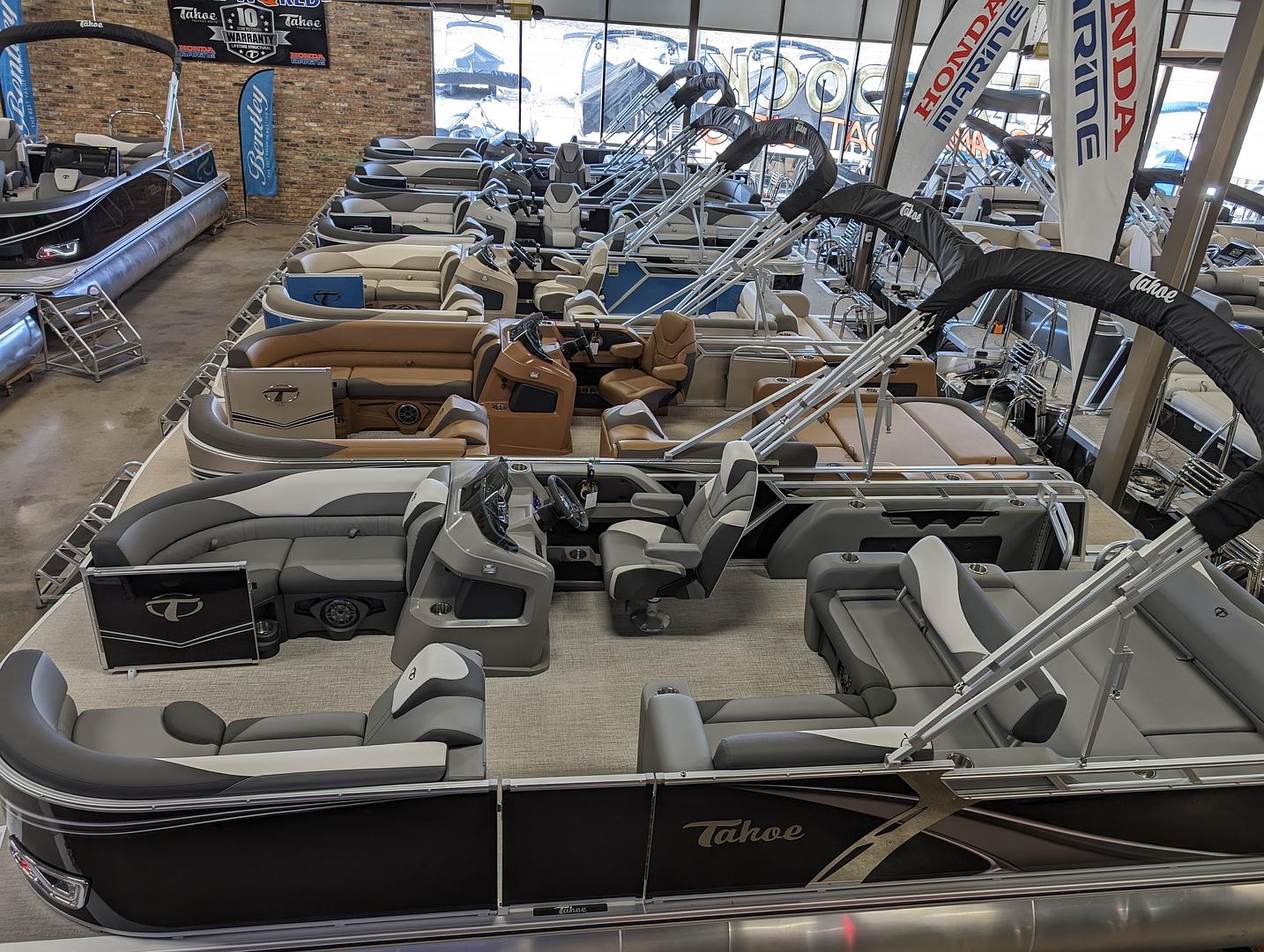
From Barrels to Tritoons: The Rise of the Pontoon Boat
When you think of boats, your mind might go first to sleek fiberglass speedboats or rugged aluminum fishing boats. But a quieter revolution has taken hold on lakes and rivers across the country: the pontoon boat. From humble beginnings, pontoons have grown in design, capability, and popularity — to the point where many boaters are upgrading, expanding, and choosing pontoons as their primary family watercraft.
A Brief History of Pontoon Boats
- The modern pontoon boat is generally traced back to the early 1950s in Minnesota. A farmer named Ambrose Weeres built a dock‐style deck atop two steel barrels (later aluminum cylinders) tied together, forming a stable floating platform for leisure boating.
- Over time, manufacturers refined materials (moving from barrels/steel to aluminum pontoons), improved buoyancy, structural strength, and comfort. Upholstery, more refined seating, better safety, more powerful motors—all of these have made pontoons much more than “lounge platforms that float.”
- The trade‐off has always been between weight/cost and strength/performance. Early pontoons were simple, slow, and mostly for casual cruising. Today’s pontoons are vastly more capable.
Traditional Boats vs. Pontoons: What’s Changed & What’s Gained
Traditional boats—fiberglass, deep-V hulls, aluminum fishing boats—have long been valued for speed, wave-piercing in rough waters, fishing capability, etc. But pontoons have caught up in many respects, and offer some compelling advantages:
Traditional Boats vs. Pontoons: What’s Changed & What’s Gained
Deck Space & Layout
- Traditional fiberglass or aluminum boats have limited seating due to hull shape.
- Pontoons offer wide, open decks with flexible seating—perfect for family gatherings, dining, or sunbathing.
Stability & Shallow Water Access
- Deep-V hulls handle big waves but sit deeper in the water.
- Pontoons float higher with shallower drafts, making them easier to beach and safer for kids to board.
Comfort & Amenities
- Traditional boats often require upgrades to add luxury features.
- Modern pontoons come equipped with plush seating, loungers, premium flooring, sound systems, and shade canopies right from the factory.
Versatility on the Water
- Traditional hulls are often specialized—fishing, speed, or watersports.
- Pontoons adapt easily: tubing, wakeboarding, fishing, swimming, or simply cruising all in one boat.
Maintenance & Value
- Fiberglass hull repairs can be expensive, and aluminum fishing boats trade comfort for practicality.
- Pontoons balance durability with strong resale value, especially from top brands like Tahoe, Bentley, and Princecraft.
Why Pontoons Are a Great Family Addition
For many families, buying a boat isn’t just about performance—it’s about memories, safety, comfort, and versatility. Here’s how pontoons shine:
- Space and layout: Enough room for kids to play, adults to socialize, even bring pets. Lots of seating, open deck, often convertible furniture (lounges, removable tables, etc.).
- Ease of use: They are fairly forgiving boats—less likely to slam in chop, shallower draft means fewer worries about underwater obstacles. Boarding is easier, especially for children or elderly.
- Safety: With multiple pontoons/tubes, good buoyancy and redundancy. With lower center of gravity than some speed boats.
- Multi-use: One weekend you’re cooling off at a sandbar, the next you’re pulling tubes or wakeboarding, or fishing. Or just cruising and enjoying the view. Instead of owning multiple specialized boats, one pontoon often covers many use cases.
- Value for memories: Families can do more together with a pontoon. Picnics, sunsets, swimming, parties—all easier with a stable, open deck and comfortable amenities.
The Rise of the Tritoon & Why Many Second Buyers Are Upgrading
A key trend in the pontoon market: many second-time boat buyers, especially those who started with a more basic pontoon or even a traditional boat, are moving into tritoons (three-log pontoons) or “tri-toons.” Here are some reasons:
- More power & capacity: A third log gives more buoyancy, allows heavier motors and more passengers / gear with less strain. For boats that are used for watersports (wakeboarding, skiing, higher speed cruising), the extra support matters.
- Better performance in chop: With larger pontoons, sometimes more logs, pontoons can handle rougher water better and behave more stably; less slamming. For boaters who want to venture farther from calm shores or on lakes with more chop, that helps.
- More amenities & luxury expectations: As buyers gain experience, they often want more: bigger sound systems, more seating, better finishes. Tritoons provide size and space to add these without feeling cramped.
- Resale & prestige: Higher end models (luxury finishes, powerful motors, premium brands) tend to hold value better; plus upgrading to a tritoon signals a next level of boating lifestyle.
So many people who once got a modest pontoon for family fun are finding that for their second or third boat, a tritoon offers them a better “all-round” experience.
Tahoe, Bentley, and Princecraft: Brands That Stand Out
To get specific, here are how some of the top brands compare / shine, especially in the pontoon space:
- Tahoe is known for combining luxury, performance, and durability. Their manufacturing is U.S.-based, using heavy-duty aluminum and high-quality materials. They offer a broad line of models (cruisers, elite models, sport or performance models). Tahoe also backs its boats with strong warranties (structure + long-term protection
- Models like the LTZ, Cascade, Grand Tahoe show Tahoe’s scope: from more affordable luxury to upper-tier finishes.
- Princecraft emphasizes fit and finish, durability, style, and options. Things like custom engineering for power (Mercury outboards often), good resale value, coordinated finishes, thoughtful amenities (storage, sound systems, furniture) are part of their appeal.
- They have multiple series (Vectra, Jazz, Sportfisher, Brio electric, etc.), so whether your priority is fishing, watersports, cruising, or something more eco-friendly, there’s a model. The tritoon offerings are increasingly prominent.
- Bentley is recognized for delivering a strong balance of value, comfort, and performance. Their boats are built with quality aluminum construction and attention to reliability, making them a smart choice for families and recreational boaters who want plenty of features without paying top luxury prices. Bentley emphasizes versatility across their lineup, with popular layouts like swingback and quad lounge seating, offering plenty of space for entertaining or relaxing on the water.
How the Market Has Shifted: From Fiberglass/Aluminum to Pontoons
- Changing lifestyles & priorities: Boaters increasingly want multi-use, comfort, ease. For many people, the ability to entertain, relax, and have versatile water fun is more important than raw speed or rough-water performance. Pontoon designs have evolved to meet those desires.
- Material & design innovations: Better aluminum pontoons, better hull/bracing designs, better marine craftsmanship (vinyls, flooring, sound systems, lighting, etc.), improved motors. All this allows pontoons to close gaps in what traditional boats were better at, while offering the advantages of pontoons.
- Water sports capability improvements: With more horsepower, better trim, more efficient hull and pontoon shapes, tritoons included, pontoons are more capable for towing (wakeboards, tubes, etc.) than earlier models.
- Consumer expectations & resale value: As the pontoon market matures, buyers expect more: warranties, brand reputation, service, resale. Premium features are becoming more normalized.
- Price pressure & value perception: In many cases, been cheaper to get a lot of boating enjoyment per dollar with pontoons (especially for family-oriented fun). Even though high-end pontoons can cost as much as some boats, they tend to retain appeal, and the value from what you can do with them is strong.
For the Second Time Buyer: Upgrading to Tritoon
If you already own a pontoon or a simpler boat, here are reasons many are making the jump to a tritoon or higher spec pontoon:
- Wanting more speed or better performance for towing or covering longer distances on lakes.
- Needing more capacity (people, gear, kids, pets) while maintaining comfort.
- Improving ride quality especially in choppy water / wind. The third pontoon helps with buoyancy and reduces slamming.
- Enjoying more luxury / amenities (upper-level audio, lighting, shade, furniture) that need space and structural capacity.
- Turning the boat into more of a lifestyle vehicle, not just a weekend toy: sandbar parties, overnight stays (where allowed), entertaining, etc.
Tritoons come with higher cost (purchase, fuel, possibly heavier trailer etc.), but many find the tradeoff worth it.
Why Boat World Is a Great Dealership for New & Repeat Buyers
If you're in the market for a pontoon—whether it’s your first, second, or more—having the right dealer makes a big difference. Here are how Boat World stands out:
Broad inventory & brand selection
Boat World carries major brands like Tahoe, Princecraft, Bentley, and more. That means you can compare different styles, power levels, finishes, tritoons vs dual-log pontoons, etc., in one place.
Expertise & guidance
Buying a pontoon involves more than looking at color and price. It includes thinking about hull/pontoon design, engine size, usage (what you’ll do with it), storage, trailer, maintenance. A dealership with experience helps you match the right boat to your lifestyle to avoid buyer’s remorse.
Service & parts availability
A good dealer keeps stock of parts, offers maintenance, knows local waterways (Minnesota lakes etc.), understands local regulatory and safety requirements, and can help with warranties. All this adds value over time.
Support for upgrades & trade-ins
For people upgrading (say, from a dual-log pontoon to a tritoon), a dealership that does trade-ins, helps you figure total cost of ownership, helps you understand how features scale (engine, trailer, storage) is very helpful. Boat World is positioned to help both first-time buyers and repeat buyers to find what really works.
Value & trust
Brands like Tahoe and Princecraft are strong, but prices and value can vary depending on dealership, options, financing etc. Boat World emphasizes fair pricing, good warranties, transparent deals, that helps buyers of all experience levels.
Conclusion
Pontoons have come a long way since wooden decks over barrels. Today’s pontoons offer luxury, performance, versatility, and comfort in ways that threaten the dominance of traditional boats in many settings—especially for families and second-time boat owners.
If you’re looking at your first boat, or thinking about upgrading to something bigger, more powerful, or more refined like a tritoon, brands like Tahoe, Princecraft, and Bentley offer lots of great choices. And working with a dealership like Boat World that has inventory, experience, and focus makes the path smoother.