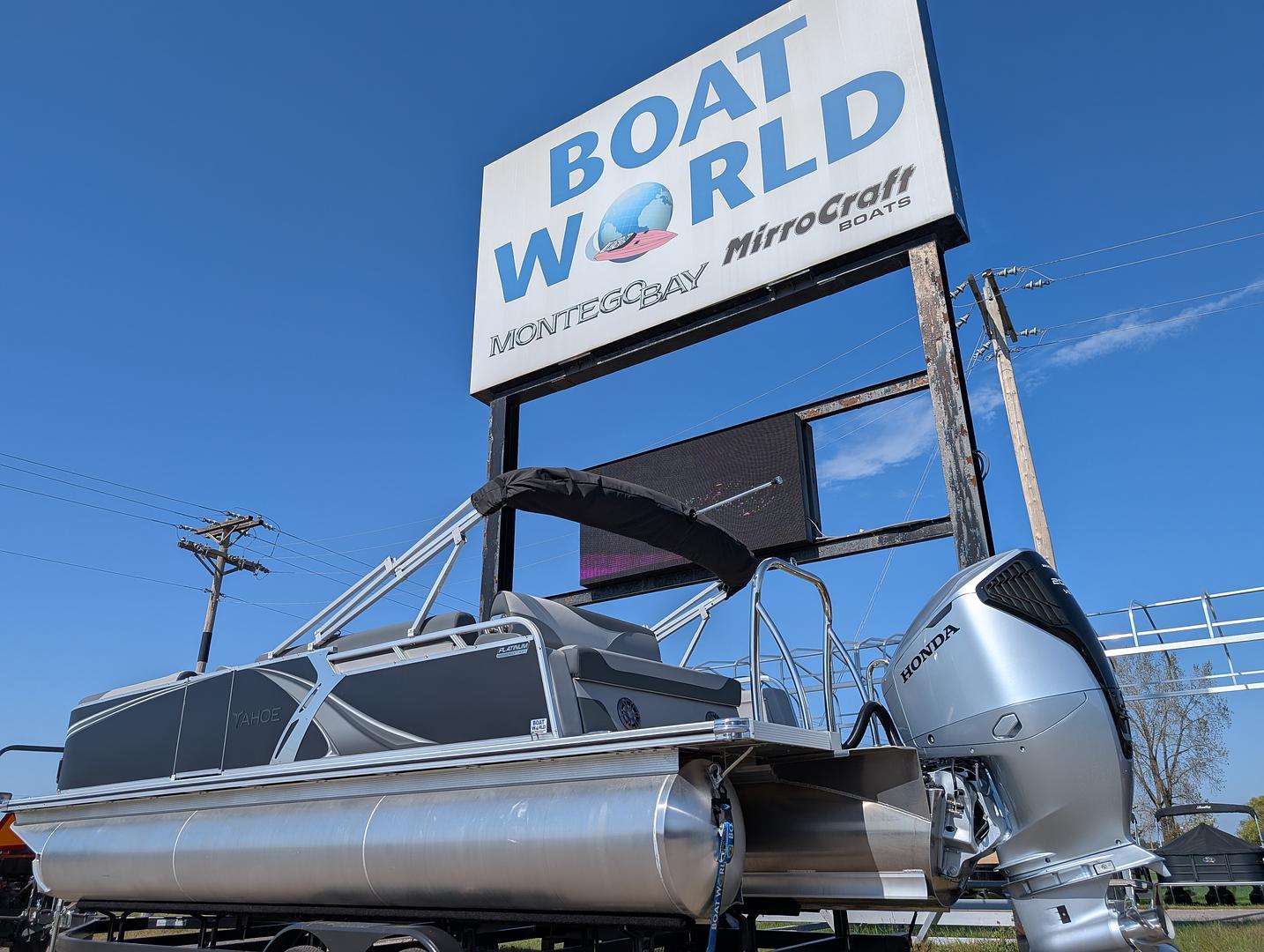
Should I Buy a Pontoon Boat? Pros, Cons, and Why Pontoons & Tritoons Are Taking Over
If you’ve been asking “should I buy a pontoon boat?” you’re not alone. In the last few years, there’s been a real-world shift: a mass exodus from fiberglass runabouts and traditional aluminum fishing boats into pontoons and tritoons—because today’s pontoon boats aren’t “slow floating living rooms” anymore. They’re legitimate do-everything boats.
Modern pontoons and tritoons can cover the same weekend checklist that used to require a runabout and a fishing boat: family cruising, tubing, wakeboarding/skiing, fishing, sandbar days, sunset rides, and all-day lounging—often with more space, more comfort, and more flexibility.
Below is a plain-English breakdown of the pontoon boat pros and cons, the keywords shoppers care about (price, performance, layouts, horsepower, towing, fishing features, resale), and what to look for if you want a pontoon that truly replaces a runabout or aluminum fishing rig.
Why Pontoons & Tritoons Replaced the “Old Boat Categories”
For a long time, boat buying felt like this:
- Fiberglass runabout / bowrider: family cruising + watersports, limited fishing comfort
- Aluminum fishing boat (Lund, Alumacraft, etc.): fishing-first, less comfort for the whole crew
- Pontoon: comfort-first, slower, “not a sports boat”
That’s not how it works now.
Today’s pontoon market exploded because design + tubes + power + technology all leveled up:
- Tritoons (3-tube pontoons) handle chop better, turn flatter, and feel more planted at speed.
- Performance packages (lifting strakes, underskinning, tube upgrades) make higher speeds realistic.
- Layouts and features now mirror what buyers want most: seating, storage, shade, sound, and multi-use space.
Result: a pontoon or tritoon can legitimately be your family boat + ski boat + fishing boat in one.
Why People Love Them Pontoons
1) Space, comfort, and “family time” are unmatched
If your priority is bringing more people more comfortably, pontoons win. You get:
- Open deck space for kids, coolers, dogs, and guests
- Wraparound seating, changing rooms, tables, and better passenger flow
- Easy boarding and lower stress for multi-generational boating
2) Versatility: cruise + fish + water sports + lounge
The biggest reason people switch is the “one boat solution.”
- Ski/tow capability is common on the right setup (especially tritoons)
- Fishing layouts (rod storage, livewell options, seats, electronics, trolling motors) have become mainstream
- Lounge layouts (rear-facing loungers, swingbacks, quad lounges) are built for actual all-day relaxing
3) Modern horsepower makes them legit performers
If you want speed, pulling power, and big-water confidence, the engine conversation matters.
- The McLaren Performance M300 is a 300 hp outboard developed through a Honda Marine + McLaren Engineering collaboration and is positioned as a performance-tuned option based on Honda’s high-power platform.
- The Honda BF350 is Honda’s 350 hp V8 flagship outboard—built for bigger boats and buyers who want maximum power and strong acceleration.
That kind of horsepower is exactly why buyers who used to default to fiberglass runabouts are now choosing fast tritoons for tubing, skiing, and covering long distances.
4) Styling and options are on another level
A huge (often underestimated) reason pontoons are booming: you can build the look you want.
Today’s pontoon and tritoon buyers shop:
- Color packages (rails, fencing, accents, upholstery tones)
- Premium flooring options
- Upgraded sound systems
- Lighting packages (docking lights, underwater lights, interior LEDs)
- Tops and shade upgrades, power bimini options, and more
It’s not just a boat—it’s a configurable platform.
5) Often more boat for the money than fiberglass or “legacy” aluminum brands
When shoppers compare pontoon boat price vs runabout price, or tritoon vs fiberglass bowrider, the value story shows up fast:
- More usable space per dollar
- Easier “bring the whole crew” ownership
- Competitive monthly payments for the size and capability
And when you compare to many established aluminum fishing boats (think Lund and Alumacraft), pontoons can be a surprisingly affordable way to get a bigger, more comfortable platform—especially if your fishing style includes family cruising and sandbar time too.
How to Decide: Pontoon vs Tritoon vs Runabout vs Aluminum Fishing Boat
Ask yourself these buyer questions:
1) How many people do you usually boat with?
- If it’s often 6–12, pontoons shine.
2) Do you want to tow (tubing/skiing/wakeboarding)?
- You can absolutely tube behind a pontoon, but if you want the real skiing experience (stronger pull, better speed control, and handling), you’ll likely want a tritoon with the right power package.
3) Is fishing a primary mission—or an occasional add-on?
- Fishing-focused pontoons exist, but your layout choice matters a lot.
4) What water are you on?
- Small calm lakes: pontoon or tritoon can work
- Bigger water: tritoon tends to be the confidence pick
5) Are you replacing two boats with one?
- That’s where the “pontoon takeover” really makes sense.
Pontoon Buying Checklist
When people search “should I buy a pontoon boat pros and cons,” they also search for:
- pontoon boat price, tritoon cost, monthly payment
- best pontoon for families, best pontoon for fishing
- tubing / skiing pontoon, fast tritoon
- horsepower for pontoon, 200 hp vs 250 hp vs 300 hp
- fuel efficiency, maintenance, winterization
- resale value, trade-in value, warranty and service
If you want the pontoon to replace a runabout, focus on:
- Tritoon hull
- Performance package
- Right horsepower
- Layout that matches your use
FAQ: “Should I Buy a Pontoon Boat?”
Are pontoon boats good for skiing and tubing?
Yes—when set up correctly. A tritoon with the right horsepower and tow features can be excellent for tubing and capable for skiing.
Is a tritoon worth it over a pontoon?
If you want better handling, more speed potential, and more confidence in chop—often yes.
Are pontoons good fishing boats?
They can be. Choose a fishing layout (seats, storage, electronics options) if fishing is a priority.
Do pontoon boats cost less than fiberglass boats?
Often they can be more affordable for the amount of space and comfort you get—especially when comparing similarly sized “family-capacity” boats.
What horsepower do I need for a pontoon boat?
It depends on passenger load, lake size, and whether you tow. If performance is the goal, power matters—and modern high-power options now go up to 300+ and 350 hp in Honda’s lineup.
Bottom Line: Who Should Buy a Pontoon or Tritoon?
Buy a pontoon if you want:
- Maximum comfort and space
- Simple cruising and relaxing
- A boat that keeps everyone happy
Buy a tritoon if you want:
- Better handling and ride comfort
- Higher speed potential
- A true “runabout replacement” feel with the right setup
If you’re coming from a fiberglass runabout or an aluminum fishing boat (Lund/Alumacraft style) and you’re trying to get one boat that does it all, it makes sense why pontoons and tritoons are dominating: they finally became the most versatile platform on the water.